
Powerlifting often gets a reputation for being extreme, intense, and unforgiving on the body. But when powerlifting principles are guided by medical knowledge, the story changes completely. A Powerlifting Doctor brings together clinical expertise and years under the barbell to create a system that builds muscle, supports long-term health, and improves recovery instead of destroying it.
This article explains the philosophy behind that approach and highlights five carefully selected exercises that deliver strength, resilience, and longevity. These are not trendy movements. They are timeless tools for anyone who wants to stay strong for decades, not just a season.
Who Is a Powerlifting Doctor and Why This Perspective Matters

A Powerlifting Doctor understands both human physiology and real-world strength training. This dual background changes how exercises are selected, programmed, and progressed.
Medical Expertise Meets Strength Training
Knowledge of joints, connective tissue, muscle adaptation, and injury mechanisms allows smarter decisions in the gym. Exercises are chosen not only for muscle activation, but also for their long-term impact on the body.
Longevity as the Primary Goal
Instead of focusing on how much weight can be lifted today, the Powerlifting Doctor prioritizes how well the body will function ten, twenty, or thirty years from now. This mindset reshapes technique, volume, and recovery strategies.
The Powerlifting Doctor Training Philosophy
Strength training does not need to be reckless to be effective. The core philosophy is sustainability.
Building Strength Without Breaking the Body
Heavy loading has benefits, but only when biomechanics are respected. Joint-friendly variations that preserve muscle stimulus while reducing wear and tear are emphasized.
Recovery as a Core Training Variable
Recovery is treated as part of training, not an afterthought. Exercise selection, volume, and intensity all influence how quickly and effectively the body recovers.
Why These 5 Exercises Were Chosen

Out of countless movements, these five consistently deliver results for muscle growth, joint health, and recovery.
Evidence-Based Movement Patterns
Each exercise aligns with natural force production and human movement patterns, improving efficiency and reducing injury risk.
Joint-Friendly and Scalable Across Ages
These movements can be adapted for beginners, experienced lifters, and older adults by adjusting load, range of motion, and tempo.
Exercise 1: Trap Bar Deadlift
The trap bar deadlift is a cornerstone lower-body movement in the Powerlifting Doctor framework.
Why This Deadlift Variation Is Preferred
The trap bar keeps the load closer to the body’s center of gravity, reducing spinal shear stress while still allowing significant strength development.
Muscles Targeted and Longevity Benefits
This exercise strengthens the glutes, quadriceps, hamstrings, and core while reinforcing safe lifting mechanics that transfer to daily life.
Recovery-Friendly Programming Strategies
Moderate rep ranges and controlled intensity promote steady progress without excessive nervous system fatigue.
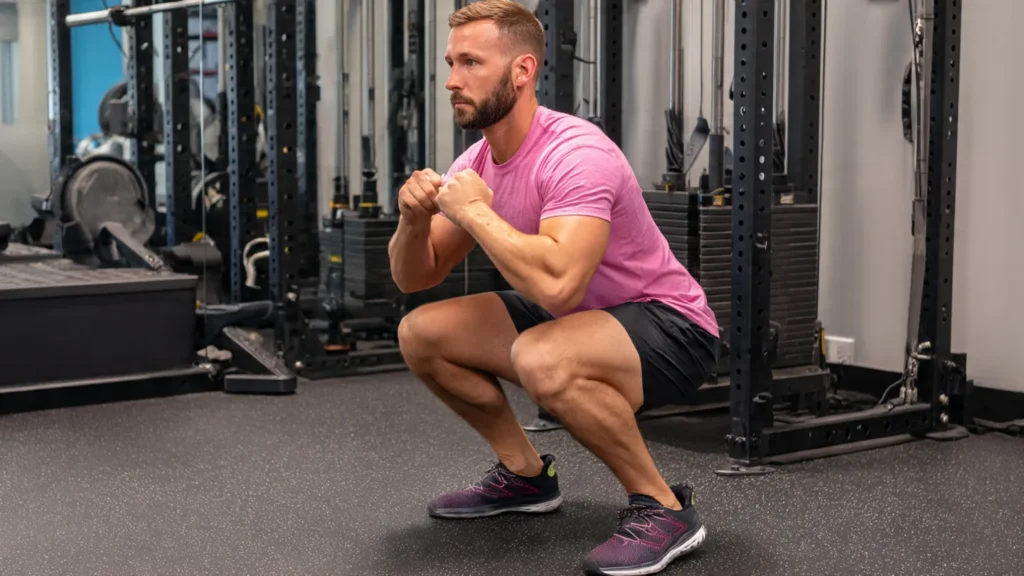
Exercise 2: Goblet Squat
The goblet squat is simple, effective, and highly valuable for long-term joint health.
A Squat Pattern Designed for Longevity
Holding the weight in front naturally improves posture, balance, and depth, reinforcing proper squatting mechanics.
Mobility, Balance, and Muscle Development
Goblet squats enhance hip mobility, strengthen the legs, and engage the core with minimal spinal stress.
Optimizing Recovery With Goblet Squats
Higher repetitions and controlled tempo provide muscle stimulus while remaining easy on the joints.
Exercise 3: Incline Dumbbell Press
Pressing movements often cause shoulder discomfort over time. This variation offers a safer alternative.
Supporting Shoulder Health While Building Strength
Dumbbells allow natural arm movement, reducing joint strain, while the incline angle improves shoulder comfort.
Upper-Body Muscle Benefits
The chest, shoulders, and triceps are effectively trained without forcing the joints into compromised positions.
Managing Volume for Better Recovery
Moderate loads and stopping short of failure allow frequent training without overuse injuries.
Exercise 4: Chest-Supported Row
Back strength is essential for posture, longevity, and pain-free movement.
Why Spine Support Matters
Chest-supported rows eliminate excessive lower-back loading, allowing focused upper-back development.
Posture and Daily Life Carryover
A strong upper back supports posture, breathing mechanics, and shoulder stability as people age.
Execution Tips for Longevity
Slow, controlled repetitions maximize muscle activation and minimize unnecessary strain.
Exercise 5: Loaded Carry
The loaded carry is one of the most practical and underrated strength exercises.
The Ultimate Real-World Strength Builder
Carrying weight challenges the core, grip, and posture simultaneously, closely mirroring real-life demands.
Benefits for Core Stability and Resilience
Loaded carries train the body to resist collapse, improving balance and reducing injury risk.
Using Loaded Carries to Support Recovery
Light to moderate carries can be included on recovery days to increase circulation without excessive fatigue.
How to Program These Exercises Effectively
Exercise selection is only part of the equation. Smart structure determines long-term success.
Weekly Training Structure
Most individuals benefit from two to four training sessions per week, rotating intensity and focus.
Balancing Intensity and Rest
Hard training days should be followed by lighter sessions or rest to protect joints and maintain progress.
Common Mistakes in Powerlifting-Style Training
Even well-designed programs can fail if these mistakes are made.
Ignoring Recovery Signals
Persistent soreness, poor sleep, and declining performance indicate the need for adjustment.
Prioritizing Numbers Over Health
Strength gains lose value when they come at the cost of pain, stiffness, or reduced mobility.
Longevity Training Beyond the Gym
Long-term strength depends on more than exercise alone.
Sleep, Nutrition, and Stress Management
These factors strongly influence recovery, hormone balance, and injury prevention.
Consistency Over Intensity
Sustainable, consistent training outperforms extreme approaches over time.

Conclusion: Strength That Lasts a Lifetime
The Powerlifting Doctor approach proves that strength and longevity can coexist. By choosing intelligent exercises and respecting recovery, it is possible to build muscle, protect joints, and maintain performance well into later life. These five exercises are not shortcuts—they are foundations for a strong, resilient body that performs year after year.
Frequently Asked Questions
Can beginners follow this Powerlifting Doctor approach?
Yes. These exercises are scalable and suitable for all experience levels.
How often should these exercises be performed?
Most people benefit from training them two to four times per week.
Are these exercises safe for older adults?
When performed with proper technique and appropriate loads, they are highly beneficial.
Do heavy weights need to be used to see results?
No. Moderate loads and consistent execution are enough for strength and muscle gains.
Can this style of training help prevent injuries?
Yes. It strengthens movement patterns that support joint health and long-term resilience.